.png)
Invited Presentation
SPSJ
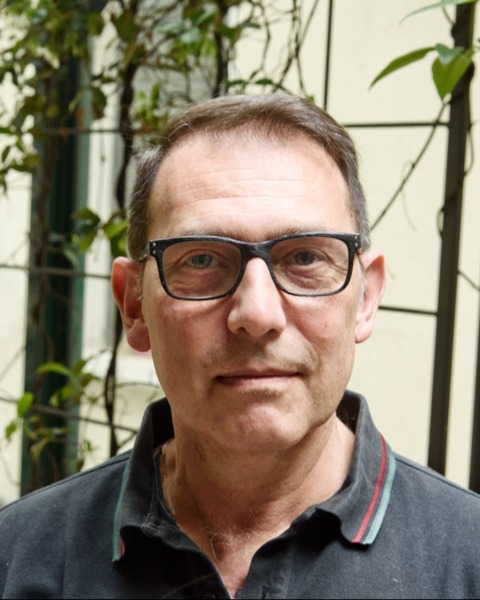
Andrea Mele, PhD (he/him/his)
Full professor of Chemistry at Politecnico di Milano - Italy
Politecnico di Milano - Italy
Milano, Lombardia, Italy
Marco Paolantoni
Università di Perugia
Perugia, Umbria, Italy
Jacopo Vigna
Università di Trento
Trento, Trentino-Alto Adige, Italy
Ines Mancini
Università di Trento
Trento, Trentino-Alto Adige, Italy
Fatima Matoroodi
Elettra Synchrotron
Trieste, Friuli-Venezia Giulia, Italy
Barbara Rossi, PhD
Beamline scientist
Elettra Synchrotron
Trieste, Friuli-Venezia Giulia, Italy
The potential use of ionic liquids (ILs) and deep eutectic solvents (DES) as alternative solvents to preserve the native structure of DNA over extended periods presents significant promise for biotechnological and biomedical applications. The impact of cations, anions, and molecular components in imidazolium-based ILs and choline-based DES on the thermal structural stability of model nucleic acids is investigated and discussed. Multi-wavelength UV resonance Raman spectroscopy is central to this study, enabling precise, base-specific monitoring of heat-induced DNA structural transitions. Representative case studies reveal preferential interactions between imidazolium cations and guanine bases within the DNA groove, which facilitate enhanced guanine stacking at elevated temperatures. In DES systems, strong perturbation of the adenine-thymine hydration shell is observed, while hydrogen bonding between guanine residues and DES components contributes to dsDNA stabilization. These findings, made possible by Raman spectral insights, deepen our understanding of IL and DES interactions with A–T and G–C base pairs during thermal unfolding. [1-4]
Acknowledgements: A portion of this study was carried out within the MICS (Made in Italy – Circular and Sustainable) Extended Partnership and received funding from the European Union Next-Generation EU (PIANO NAZIONALE DI RIPRESA E RESILIENZA (PNRR) – MISSIONE 4 COMPONENTE 2, INVESTIMENTO 1.3 – D.D. 1551.11-10-2022, PE00000004). This manuscript reflects only the authors’ views and opinions, neither the European Union nor the European Commission can be considered responsible for them.
REFERENCES
[1] F. Fadaei et al., Int. J. Biological Macromol. (2024) 256, 128443
[2] F. Fadaei et al., J. Mol Liquids (2022) 347, 118350
[3] B. Rossi et al., Phys. Chem. Chem. Phys. (2021), 23, 15980
[4] C. Bottari et al., J. Mol Liquids (2021) 330, 115433