.png)
Oral Contributed Presentation
RAM
Richard A. Crocombe, MA, PhD (he/him/his)
Principal
Crocombe Spectroscopic Consulting
WINCHESTER, Massachusetts, United States
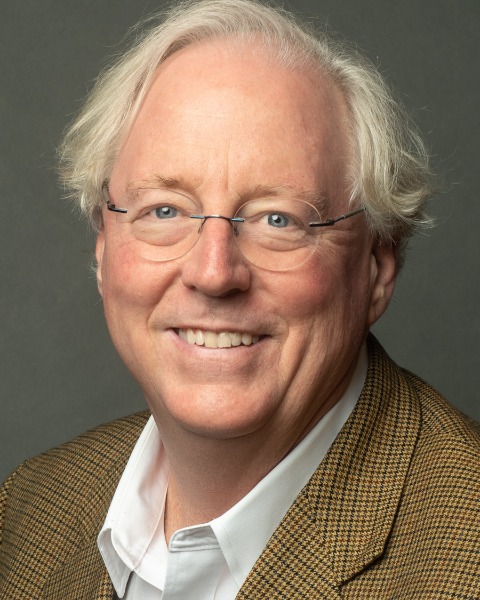
Peter J. Larkin (he/him/his)
Syensqo
Stamford, Connecticut, United States
Pauline E. Leary, PhD
CBRNE Subject Matter Expert
Noble, inc
Stanfordville, New York, United States
Brooke W. Kammrath
Professor
University of New Haven andHenry C. Lee College of Criminal Justice and Forensic Sciences
West Haven, Connecticut, United States
Mary Kate Donais
Professor
St Anselm College
Manchester, New Hampshire, United States
In 2024 we proposed the use of a set of Lego blocks as samples to evaluate fluorescence mitigation and avoidance techniques, and performance with dark samples, in Raman spectroscopy. (1) In that paper we characterized their Raman spectra using laboratory instruments with a variety of exciting wavelengths. At last year’s SCIX we described the performance of ten different handheld Raman instruments, employing a number of these schemes and a variety of exciting lines, using these blocks. (2) The combination of a series of colored blocks (white, yellow, red and blue), and successively darker tone blocks (white, gray and black) did challenge these instruments, and shed light on the ways that their manufacturers have optimized these instruments in specific areas and for different purposes. The importance of fluorescence avoidance and/or mitigation for handheld Raman instruments cannot be overstated, given the challenges of scanning and identifying unknowns. The operators of these instruments are highly likely to be non-scientists, wearing personal protective equipment (PPE), who rely on the instrument giving an accurate identification of the material under test.
We have now extended this work to advanced data collection techniques which are poised to appear in handheld Raman instruments: (a) deep-UV excitation; and (b) the use of high repetition rate, short pulse duration, exciting lasers coupled with single photon avalanche photon array detectors (SPAD arrays), which have very fast time resolution capabilities. To further characterize the blocks, we have also examined them using handheld x-ray fluorescence spectrometry. The results will be reported in this presentation.
< ![if !supportLists] >1) < ![endif] >Richard A. Crocombe, Brooke W. Kammrath, Pauline E. Leary, Thomas J, Tague and William D. P. Costa, “LEGO blocks as “Standard” Samples for Evaluation of Fluorescence Avoidance and Mitigation in Raman Spectroscopy”, Appl. Spectrosc. 2024. 78(3): 340-348.
< ![if !supportLists] >2) < ![endif] >Richard A. Crocombe, Pauline E. Leary, Brooke W. Kammrath, Thomas J. Tague, Jr. , William D. P. Costa, and Michael D. Hargreaves, “Using Lego® Blocks for the Evaluation of Fluorescence Avoidance and Mitigation in Handheld Raman Spectrometers”. Appl Spectrosc., Accepted for Publication, April 2025.